Software Marketing by SoftwarePromotions


The more we need a website, the more we’re prepared to put up with a poor design.

Amazon’s layout is famously basic but effective. Consider the following after a search for paper towels:

amazon paper towels

And the appearance of the results for the same search on eBay also won’t be winning any design awards:

ebay paper towels

Amazon and eBay both offer clear and tangible benefits to their users, and so in a sense don’t need to develop the appearance of their websites.

Amazon seem instead to devote their efforts to cross-selling and upselling, while eBay offer more great (and safe) deals than any other website.

Which is why they can get away with ugliness and a dated design.

Yet both websites offer a far prettier front end. Both sites have better-designed and more attractive home pages.

ebay front page

If you rely on your website to impress visitors and turn them into customers, then an ugly interface and design simply won’t do it.


I’ve spoken to a number of people who found the There’s a war on data post a little worrying, and in particular wanted to know how to how many of their organic visits are being recorded as “not provided”, and how to see the rate of increase in this trend.

It’s very simple.

Go into your Analytics account, then choose Traffic Sources, Sources, Search, Organic.

Organic

Change the view mode to percentage to see what how much of your organic traffic is being recorded in this way.

percentage

Find (not provided) in the list of keywords and click on it.

Then select the date range to be something like the last five or six months.

date range

From there select the data to be presented on a weekly basis.

weekly

Sit back and enjoy the trend.

trend


Your website’s data isn’t abstract, academic or a goal in itself.

It’s a means of understanding your visitors – where they come from, what they’re looking for, what they do once they arrive and more.

If you’re against the concept of analytics, you’re effectively against understanding how people interact with your website and your business.

Which is why many businesses have come to rely on this information, using it to expand their products and services, respond to the needs of their visitors, and make their website perform better – both in terms of sales and from the point of view of their visitors.

Yet the accuracy and volume of the data you have access to is slowly but surely being eroded away.

Worse still, it’s under attack from three different sides.

Google’s stupidity:

In October 2011 Google announced that anyone signed into a Google account would be automatically redirected to https://www.Google.com – note the s. Anyone searching on Google and clicking on one of your organic listings would be recorded as a visitor from Google, but the keyword would not be listed.

In other words if your website receives 1,000 visitors a day from Google organic listings, and half of them are logged in to a Google service when doing so, you would only receive the keywords for 500 of them. Note that being signed in to Google includes Gmail, AdWords, Analytics, Google +, Google Docs and a wide variety of other products and platforms.

At the time Google’s estimate was that most sites would see this affecting less than 10% of their visitors, but in some accounts we’re seeing the lost data as being over 40%.

not provided

The European Union’s stupidity:

From May 26th, all UK websites must offer their users opt-in consent tools to allow cookies that pass information about your browsing activities to 3rd parties.

The important bit here is opt-in.

On our website, for example, we use Google Analytics, Get Clicky, Visual Website Optimizer, SnapEngage and more.

In 37 days time we’ll only be able to do so if our visitors opt-in.

Here are two examples of two websites making use of such a system. Both display the following at the top of their pages.

opt-in

opt in - why would you?

The obvious question is why would anyone choose to opt in, unless they had to? I wouldn’t, and I suspect that you wouldn’t either.

The likes of Amazon won’t have any problems, but many others will. Unless we restrict the functionality of our websites, and force our visitors to choose between no content or having to opt-in to something that may be a little unnerving.

Neither of which are appealing options.

Firefox’s stupidity:

As reported by Danny Sullivan (Firefox To Use Google Secure Search By Default; Expect More “Not Provided” Keywords To Follow):

The popular Firefox browser is on track to use a secure method of searching Google by default, a change that will help prevent potential “eavesdropping” of what people are searching for. It will also further reduce the ability for publishers to know how people find their sites in Google…

So what can you do about this?

Very little, unfortunately.

At the time of writing this, many UK businesses and websites appear to be waiting to see what everyone else is going to do.

And don’t even think of obvious solutions, for example switching to another platform instead of Google Analytics. The data isn’t being passed from Google, so there’s no way around it.

The whole situation is an unhealthy mix of fear, ignorance and stupidity – a lethal combination for businesses and people in general.

And the hypocrisy would be laughable if the issue weren’t so serious. For instance Google keyword data is still being passed along when someone clicks on one of Google’s ads.

Google clearly wouldn’t want stupidity to stand in the way of their business after all.

Things may get a little interesting in 37 days.


Making a great first impression is misunderstood.

When you meet someone for the first time, you’ll probably make some sort of instant judgement based on what you see. What they’re wearing, how they hold themselves and so on.

But this first impression can be forgotten.

Perhaps you weren’t initially impressed by the guy you were introduced to at a conference. He may have looked a little shabby, and seemed ill at ease and awkward.

But then you saw his presentation, and the content of his talk and his depth of insight dazzled you. You saw him in new light.

But still nothing has been permanently etched. Perhaps after the talk you spoke with him with a view to using his services, but his arrogance and general disinterest annoyed you.

So the first impression was overshadowed by the second, and this in turn was dominated by the third and possibly final impression.

The chronology of events isn’t anywhere near as important as the significance and scale of each.

If the presentation wasn’t of interest to you, you might still think of him as awkward and uninteresting. Or if he’d been only slightly disinterested in your proposal you might have been able to overlook this.

When you sell software online there are many chances to make a good impression, and some are more relevant than others.

The appearance and clarity of the website are important. Get it wrong, and users may go no further.

The installation/signup process is also important. Get it wrong and the exasperated user may simply give up.

And let’s not overlook the product itself , the quality of which determines whether the user buys or walks away.

But every single interaction between the product and user creates a new chance to create a lasting impression.

Consider the Screaming Frog SEO Tool as an example.

First impression: a cool name with a basic & clean page, but it’s all features; no benefits.

Second impression: the video was basic and  the content technical.

Third impression: the software looked clunky and ugly.

Fourth impression: the software blew me away. Five minutes after running it for the first time I paid for a pro licence and will no doubt continue to renew each year.

For me the fourth impression was the one that stuck, which is why I keep using and recommending the software.

But the more important point is that any of the slightly negative experiences may have been the last. The website may have put me off the trial, and I may have walked away never to return.

But as mentioned earlier, the significance and scale are important.

The website wasn’t terrible, the video made some good points, and the interface wasn’t of great significance to me.

You only get one chance to make a first impression, but every interaction has the opportunity to be the one that lasts.


Click Fraud poses one of the greatest threats to the future of Google, a company whose 2011 unaudited accounts show advertising generating over 96% of their total revenue.

If Click Fraud were to spiral out of control, and advertisers were to realise that a significant percentage of their ad spend was fraudulent, it wouldn’t take long for a significant number of advertisers to either dramatically scale back or even close their accounts.

This poses a very real and credible threat to the future of Google.

Google have far more to lose from Click Fraud than their advertisers, and are therefore constantly devoting significant resources to hold it at bay.

When it comes to communicating this to their advertisers, Google have to be extremely careful.

As the recent self-perpetuating petrol/fuel crisis in the UK demonstrates, telling people not to panic has the complete opposite effect.

Google therefore have to tread a fine line between showing their advertisers that they’re aware and responding to the threat, without generating fear in the process.

Their techniques for doing so are questionable.

For instance you may have noticed entries labelled service adjustment or click quality adjustment in your billing:

service adjustment

Google are vague as to what this might be, and it’s impossible to say how much of this may be down to fraud.

And at the campaign level you can now add the column Invalid Clicks, suggesting that Google believe invalid to be more palatable than fraudulent:

invalid clicks

The problem? It’s impossible to do anything remotely useful with this information.

The number of invalid clicks is only provided at the campaign level, so there’s no way of determining where they came from – no way of tracing this back to the keyword, placement or even geographic location.

If, for example, you were able to identify that the majority of invalid clicks came from a small number of countries, you could consider excluding them.

But as it stands, Google are providing you with useless information that is impossible to act on.

Google’s help on the matter – What can I do to help monitor or prevent invalid clicks? - includes the following advice:

Your first line of defense against invalid activity is to optimize your account so that your ads receive only the most targeted clicks and impressions.

Good advice, if it wasn’t for the minor point that there is no way of doing so.


Remember the days when canny website designers used to suggest what web browser you should use to view their site?

Few dare to do so today, but I’m still coming across online services that don’t work well with certain browsers. Only yesterday I was told by PRWeb that I should probably avoid using Google Chrome with their service; a browser used by around 1 in 6 users worldwide.

best viewed with

And the problem is only starting to develop.

I just looked in the Google Analytics accounts of 25 different websites and companies, to see what percentage of their visitors are using a mobile device.

The figures ranged from 0.5% to 10.3%, with an average of 4.9%.

Most companies, ourselves included, choose to ignore the problem. A few force their mobile visitors into ugly WAP-like versions of their web pages.

Mobile usage will continue to grow, and the profile of your mobile visitors may go from bored-on-the-train to people who are actively interested in what you sell.

And catering for the growth in mobile usage involves more than basic presentation.

Your visitors may be browsing your website on their iPhone, but be interested in downloading your software on their Windows desktop.

They may not know how to send a link from the device to their email client, or they may not bother trying to do so.

A good starting point would be to see how many of your visitors currently use mobile devices to view your website.

From there you can decide how (not if) to cater to them.


Don’t ask me how this started, but I’ve become very intrigued by spam.

spam - lots of it

It’s hard to find any solid data, but it’s estimated that there are around 130 – 150 billion spam sent every day.

And it’s thought that a spammer only needs a 0.0001 per cent response rate to make a profit.

Spammers have two main obstacles in their endless game of cat and mouse: products/services that block them, and recipient’s reluctance to open and act on their emails.

One in ten thousand and you’re making money.

So how do you get your one in ten thousand?

You need well written content, the technical expertise to get through the filters, and quantity.

Your website, by comparison, also needs well written and effective content, a sound product, and people who are interested in what you sell.

Yet unlike the spammers you probably need a significantly higher conversion rate.

But you can improve the odds.

More effective content is achievable through split and multivariate testing. I find it incredible that all websites don’t do this on an ongoing basis. It just works.

And more targeted visitors are available through better marketing.

Spammers need to fight the ever-changing obstacles to their business models.

Yet many online businesses choose instead to concentrate almost completely on their products, and neglect their marketing entirely.

Spam will never go away because the spammers adapt on an ongoing basis. Many online businesses, sadly, fail to do so.


Google’s remarketing allows you to reach people who’ve visited your website.

We’ve been testing the system for a few months now.

Person A visit the SoftwarePromotions website, and from that point on starts seeing our banner ads all over the web.

Warning: read the rest of this entry before you click the link!

And I mean all over. Try it.

Go to our website, a cookie will be planted on your system, and you’ll then see the reach of the remarketing system.

The question isn’t whether or not the system works. We’ve picked up new work at a low cost, and some of our clients are seeing great results from remarketing too.

The question is whether or not the basic strategy is a good idea.

Let’s consider a hypothetical example.

Your ad is shown repeatedly to 1,000 people who have visited your website but not bought what you offer.

Many (or most) of them will start seeing your ad repeatedly.

Some may start to notice it “everywhere”.

If 10 out of the 1,000 people buy what you sell as a result of the ads, that’s probably quite good.

If 100 out of the 1,000 people buy what you sell as a result of the ads, that’s probably very good.

But there are a number of important issues to consider.

The first is that it’s impossible to gauge the accuracy of the data. It’s possible that all of the 10 or 100 would have purchased anyway.

The second is that you might be irritating people. It’s possible that some of them will actually be put off you and your company by the annoyance of your ads.

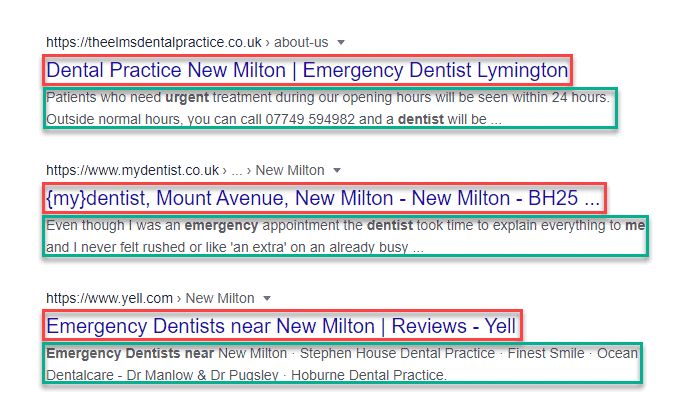
The third is what you’re selling. If you offer emergency dental services, most/all of your victims will already have found their solution, so there would be little to gain.

If you sell Software Marketing services (see the above warning before clicking the link) your potential customers might appreciate your reach and approach.

I’ve been receiving feedback from a number of people who’ve been exposed to our remarketing.

Most have been indifferent. It hasn’t registered as significant.

Some have been impressed – people are surprised that we’re advertising on websites like The Washington Post, and by our apparent perseverance.

But a small number of people don’t like it.

Peldi from Balsamiq emailed me that our banners were annoying him, and agreed to answer some of my questions:

Q: The nutshell version of Google remarketing is that it shows your ads to people who’ve visited your website in the past. You find this annoying – why?

A: Because ever since this got launched, I only ever see ads from the same two companies (SoftwarePromotions and Atlassian), wherever I go. It’s annoying because these are partners of ours, I’m already a customer! It’s also annoying because it makes me clearly aware that I’m being followed all over the web, which is creepy.

Q: Do you think that “most people” would find this sort of advertising annoying?

A: Yes, it’s creepy.

Q: Do you see a legitimate use for remarketing? A scenario that you might consider using it?

A: Not sure. Maybe once everyone does it it will feel less targeted, but I guess that’ll make it less effective so we’ll be back to square one.

Q: Remarketing ads won’t popup over all sites that you go to. If companies weren’t remarketing you’d still see other ads. Does it matter?

A: Maybe what I hate is that it’s forcing me to look at the ads. I usually ignore banners, but the fact that they’re ALWAYS yours is noticeable. But I gotta tell you, it’s not making me like your company for cyber-stalking me like this…

Over to you. I’m curious as to what you think. Please add your thoughts and opinions to the comments below.


Gut instinct is over-rated.

Try setting-up a split test on one of your website’s main pages with four new variations.

And try to predict which will win.

In theory, you have a one in five chance chance of getting it right.

In reality, you’re likely to have a different perspective on your website than your visitors, so your chance of getting it right may be lower than expected.

If you embrace split and multivariate testing (I hope you do), you’ll almost certainly hit a number of potential questions and issues after each test:

Question/Hurdle 1:Really? That one won? I find that hard to believe.

Answer: Let the experiment run longer to generate more data. The greater the sample, the more representative the data.

Question/Hurdle 2:Won’t the new version adversely affect our SEO rankings?

Answer: What’s more important: the volume of traffic you get from the search engines, or what happens to the visitors after they arrive at your website? Hits or conversions?

Question/Hurdle 3:I don’t like the winner. It just doesn’t look good.

Answer: Is your website focused on your needs or those of your visitors?

One of the risks of running multivariate tests is that you’ll get answers you don’t like. But it’s not about you.

Confession: we regularly run tests on our SoftwarePromotions website. The most recent was on the three columns of text on our home page.

Multivariate testing: the results weren't what I'd hoped for!

Initially I didn’t really want to believe the results (Question/Hurdle 1) so we let the experiment run longer. Even after we had a large data sample I still didn’t like it (Question/Hurdle 3) but had to trust the data.

Looking for evidence to prove a theory is flawed from the outset. Looking for evidence to test a theory is purer and cleaner.

Data has no agenda but the facts.


I’m going to make some assumptions about you and your website.

1: You probably have Google Analytics installed on your website.

2: You probably don’t use it very much.

A lot of companies follow three typical stages with Analytics.

Stage 1: Analytics is setup and the code installed on the website.

Stage 2: Lots of clicking on all the options. Most users quickly feel overwhelmed. Paralysis sets in.

Stage 3: The account is looked at every few months. Most users don’t go beyond the graph showing visitors over the last month.

Talk about wasted opportunities.

Analytics will give you priceless, critical and actionable information about your website.

It can stop you wasting time, sharpen your priorities, strengthen your weakest links and help you make more money.

To set the ball rolling I’m going to show you how to gauge your website’s performance in the search engines over the last year. The whole thing will take you less than one minute.

Go into your analytics account:


Change the time period to the last year or so. The easiest way is to simply click on the date, change the first year to 2011 and click apply. This will give you the last 13 months of data without wasting time.

Now change the graph to display data on a weekly basis to smooth the trends a little:

At this point we’re looking at the number of visits, so let’s use a preset segment to isolate only organic search traffic:

We’re now looking at the number of visits from organic searches. In the example we can see that the volume of traffic has dropped dramatically.

But traffic from the search engines is about quality more than quantity, so let’s also have a look at the bounce rates.

The graph now shows us that the bounce rates have gone up, but only very slightly.

So with an investment of 60 seconds, we’ve seen that the amount of organic traffic from the search engines has dropped by about 50-60%. Since then it’s been more or less steady with a slight improvement around the start of the year.

Analytics won’t (unfortunately) fix these issues, but in an incredibly short amount of time, you’re identified a very real problem that will almost certainly be having a knock-on effect on your sales.

How’s your organic traffic?


« Previous PageNext Page »